
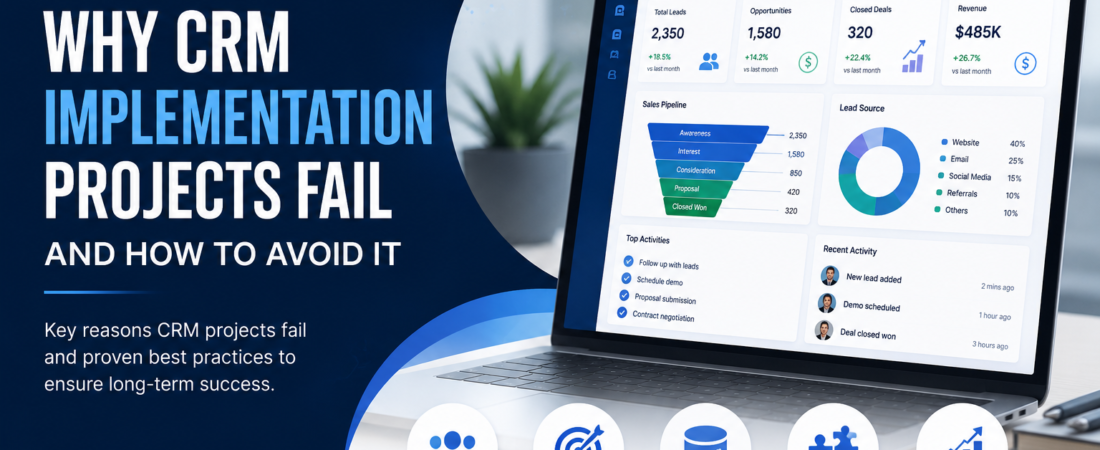
Why CRM Implementation Projects Fail and How to Avoid It
Customer Relationship Management (CRM) systems promise better visibility, stronger customer relationships, and improved sales performance. Yet many CRM implementations fail to deliver expected results.
Common Reasons for Failure
Poor User Adoption
Employees often resist new systems when they do not understand the benefits. Training and change management are critical.
Unclear Objectives
Organizations frequently implement CRM platforms without defining success metrics. Establish measurable goals before deployment.
Bad Data Quality
A CRM is only as good as the data it contains. Duplicate records, missing information, and outdated contacts reduce effectiveness.
Lack of Integration
CRM platforms should connect with marketing automation tools, websites, customer support systems, and reporting tools.
Limited Executive Sponsorship
Leadership involvement drives adoption and accountability throughout the implementation process.
Best Practices
- Define clear business objectives
- Standardize sales processes
- Invest in training
- Create governance policies
- Measure performance regularly
Conclusion
CRM success depends on people, processes, and technology working together. Organizations that focus on all three areas achieve higher adoption rates and stronger business outcomes.